
Key Takeaways
- Form 8849 is used to claim refunds for certain excise taxes already paid.
- For truck owners, Schedule 6 is often used when the refund is tied to HVUT paid on Form 2290.
- You may be able to claim a refund if you overpaid HVUT, sold the vehicle, the vehicle was destroyed or stolen, or the vehicle stayed under the mileage limit.
- For low-mileage vehicles, wait until after June 30 to file because the full tax-period mileage must be known first.
- Keep the records that support your claim, including vehicle details, payment records, mileage records, event dates, and refund calculations.
- Use Form 2290 to report and pay HVUT. Use Form 8849 later when you have a qualifying refund claim.
Paying an excise tax does not always mean the original amount remains correct. A taxed vehicle may be sold, destroyed, or stolen before June 1 and subsequently not used during the remainder of the tax period, mileage may remain within the applicable mileage-use limit, or a taxpayer may discover that HVUT was overpaid because of a mistake in tax liability previously reported on Form 2290.
IRS Form 8849 provides a way to request refunds for certain excise taxes in these and other qualifying situations. The important part is choosing the right schedule and supporting the claim with the information required for that specific type of refund.
These Form 8849 instructions explain the filing process, the schedules available, and the rules truck owners should understand when Schedule 6 is connected to Form 2290.
What Is Form 8849?
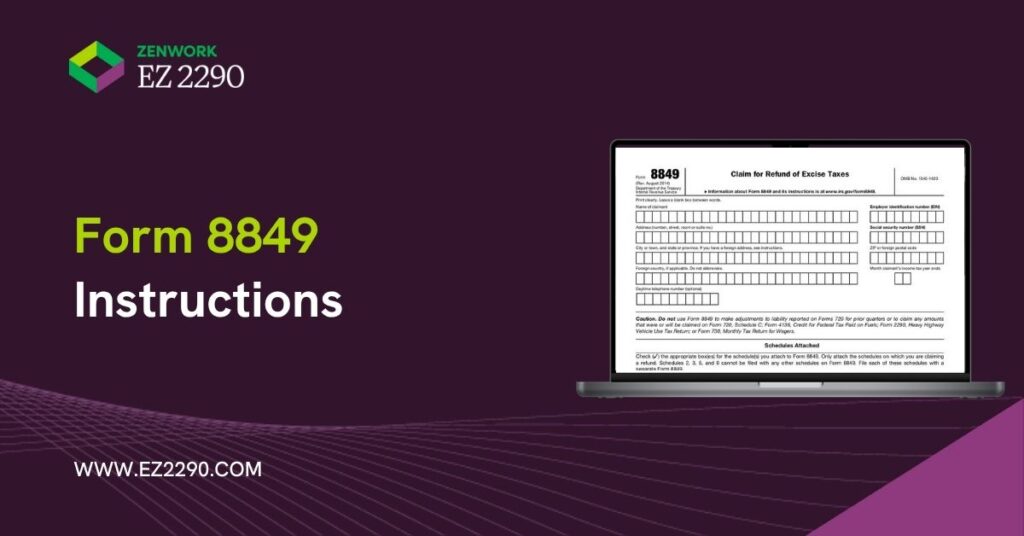
Form 8849, Claim for Refund of Excise Taxes, is used to request refunds of certain federal excise taxes. The main form identifies the taxpayer and summarizes the refund being requested, while an attached schedule explains the type and amount of the claim.
There is no single set of Form 8849 refund instructions that applies identically to every taxpayer. A fuel purchaser, registered vendor, credit card issuer, and truck owner may all use Form 8849 for different reasons.
For trucking businesses, Schedule 6 is particularly relevant because it can be used for certain refunds involving tax originally reported and paid on Form 2290.
Who Should File Form 8849?
A taxpayer may file Form 8849 when IRS rules allow a refund of excise tax already paid. Depending on the type of tax and claim, this may include:
- Businesses that paid more excise tax than they owed
- Fuel purchasers with a qualifying refund claim
- Registered ultimate vendors claiming eligible fuel tax refunds
- Certain fuel sellers or producers with refundable excise tax amounts
- Registered credit card issuers with qualifying claims
- Truck owners or fleet operators claiming an eligible HVUT refund
A taxpayer should first identify what tax was paid and why it is now refundable. That determines which schedule belongs with IRS Form 8849.
For Form 2290 claims, the person entitled to the refund depends on the reason for the claim. An overpayment or low-mileage claim is generally made by the person who paid the tax. For a vehicle that was sold, destroyed, or stolen, the claim is made by the person in whose name the vehicle was registered when the sale, destruction, or theft occurred.
Which Form 8849 Schedule Do You Need?
Form 8849 uses several schedules. Filing the wrong one can delay the claim because each schedule serves a different purpose.
Common Form 8849 Schedules
| Schedule | General Purpose |
|---|---|
| Schedule 1 | Nontaxable use of fuels. |
| Schedule 2 | Sales by registered ultimate vendors. |
| Schedule 3 | Certain fuel mixtures and alternative fuel claims. |
| Schedule 5 | Section 4081(e) and Section 6435 claims. |
| Schedule 6 | Other claims not reported on Schedules 1, 2, 3, 5, or 8. |
| Schedule 8 | Claims by registered credit card issuers. |
Schedule 6 can include refunds connected to excise taxes originally reported on Forms 720, 2290, 730, or 11-C.
Always check the current instructions for the schedule rather than treating Form 8849 as one general refund form.
Form 8849 Schedule 6 Instructions for Truckers and HVUT-Related Situations
Truck owners researching an excise tax refund claim usually need to understand three Form 2290 situations covered by Schedule 6.
Form 2290 tax was overpaid
Schedule 6 may be used when the taxpayer paid too much HVUT because the tax liability reported on Form 2290 was incorrect.
The claim should explain why the original tax was too high and how the refund amount was calculated.
Vehicle was sold, destroyed, or stolen
If a taxable vehicle was sold, destroyed, or stolen before June 1, you may be able to recover part of the HVUT already paid, as long as the vehicle was not used for the rest of that tax period.
The Form 8849 Schedule 6 instructions require supporting vehicle information, such as:
- VIN
- Taxable gross weight category
- Sold, stolen, or destroyed what happened to the vehicle?
- Date of the event
- Refund calculation
- Purchaser’s name and address for qualifying vehicle sales
Vehicle stayed below the mileage limit
A taxpayer who paid HVUT may request a refund if the vehicle was used 5,000 miles or fewer on public highways during the tax period. For an agricultural vehicle, the mileage limit is 7,500 miles. Because the full tax-period mileage has to be known first, you can only make this claim after June 30.
What Documents Do You Need Before Filing Form 8849?
What you need will depend on why you are claiming the refund.
For an HVUT-related claim, you may need:
- A copy of the Form 2290 tied to the claim
- The VIN for the vehicle involved
- The vehicle’s taxable gross weight
- The tax period you are claiming for
- Records showing the HVUT that was paid
- Your refund calculation
- Mileage records, if the claim is based on low use
- Sale records, if the vehicle was sold
- Theft or destruction records, if that is the reason for the claim
- Purchaser details, where required
- Copies of any related filings
These records support the reason for the claim and the amount being requested. Keeping them together can also make it easier to verify the information before filing or respond if the IRS requests additional details.
How to Fill Out Form 8849: Step-by-Step Guide
What You Should Gather Before You Start
Before completing Form 8849, gather the basic information tied to the claim so you can complete the form and schedule accurately.
- A copy of the related Form 2290, if applicable
- EIN or other taxpayer identification information
- Business name and address
- HVUT or other excise tax details related to the refund
- Claim-period dates, such as the tax period or sale/theft/destruction date
- Refund calculation records
- Vehicle or highway-use tax records, if applicable
Steps to Fill Out Form 8849
Step 1: Enter taxpayer information
Enter the legal name, address, and taxpayer identification number of the person or business making the claim.
These details should match the related tax filing and IRS records.
Step 2: Choose the correct schedule
The schedule depends on what you are asking the IRS to refund, so check the list and pick the right schedule accordingly. If the claim is for HVUT already paid through Form 2290, it will usually go on Schedule 6.
Step 3: Complete the schedule
Provide the information required for that claim type.
The details for a Form 2290 Schedule 6 filing might include vehicle information, the original tax period, dates, mileage, sale, theft, or destruction.
Step 4: Calculate the refund amount
Calculate only the amount the taxpayer is entitled to recover.
For a vehicle sold, stolen, or destroyed, the refund is generally prorated according to the Form 2290 rules. For low mileage, the claim concerns tax paid on a vehicle that ultimately remained within the mileage-use limit.
Keep the calculation with the claim records.
How to File Form 8849
Once the form and schedule are filled out, review the claim before sending it in. Check that the refund amount is correct and that the explanation and supporting records match what you are claiming. Schedule 6 claims may also need details showing how the refund was calculated.
Then sign Form 8849 and submit it using the filing method available for your schedule. Form 8849 may be eFiled through an IRS-approved Modernized e-File provider, and paper filing may also be available.
Common Form 8849 Mistakes That Delay Refunds
Several problems can make an otherwise valid claim harder for the IRS to process:
- Selecting the wrong Form 8849 schedule
- Applying Schedule 6 to an amount that has been claimed as a Form 2290 credit
- Typing in an incorrect VIN
- Leaving out the date a vehicle was sold, stolen, or destroyed
- Filing a low-mileage claim before the end of the tax period
- Giving the refund amount without showing how it was calculated
- Leaving out purchaser information for a qualifying vehicle sale
- Using Form 8849 when another IRS form is required
- Filing with insufficient supporting records
Form 8849 vs. Form 2290: What’s the Difference?
Form 8849 and Form 2290 are both connected to federal excise tax matters, but they serve different purposes.
| Form | Main Purpose |
|---|---|
| Form 2290 | Report and pay HVUT for taxable highway vehicles and handle certain credits or amendments. |
| Form 8849 | Request qualifying refunds of excise tax. |
| Schedule 6 | Report “other claims,” including qualifying Form 2290 refund claims. |
Form 2290 is generally used to report and pay the Heavy Highway Vehicle Use Tax for taxable heavy vehicles. It is the form truck owners, owner-operators, and fleets use when meeting annual HVUT filing requirements.
Form 8849, on the other hand, is used to claim certain excise tax refunds. It is not a replacement for Form 2290 and should not be used as a catch-all form for every trucking-related tax issue.
An amount already claimed or intended to be claimed as a Form 2290 credit should not also be requested as a Schedule 6 refund.
FAQs
1. What is Form 8849 used for?
Form 8849 is used to request refunds of certain federal excise taxes. The schedule attached depends on the type of claim.
2. Which schedule do I attach to Form 8849?
The schedule depends on the type of refund claim being made. Form 8849 includes multiple schedules, and each one applies to a different category of excise tax refund.
3. What is Schedule 6 on Form 8849?
Schedule 6 covers claims that do not belong on Schedules 1, 2, 3, 5, or 8. It includes certain refunds connected to Form 2290.
4. Can Form 8849 be eFiled?
Yes. Form 8849 and supported schedules, including Schedule 6, can be filed electronically through IRS-approved Modernized e-File providers.
5. What is the difference between Form 8849 and Form 2290?
Form 2290 is where the HVUT liability is reported and paid. Form 8849 comes in later only when there is a qualifying excise tax amount to be refunded. So, for truckers, one handles the tax due and the other handles certain refunds of tax already paid.
6. What records should I keep for Form 8849?
Keep the records that support the claim and the refund calculation. For an HVUT-related claim, this may include Form 2290 information, vehicle details, payment records, mileage records, dates, sale information, and related calculations.
The Bottom Line
Once you know what kind of refund you are claiming and which schedule covers it, Form 8849 instructions become much easier to follow. From there, the job is mostly about getting the details right: the tax that was paid, the reason a refund is due, the amount being claimed, and the records that support it.
For truck owners, that also means knowing when the issue belongs on Form 2290 and when a refund should be claimed through Form 8849 Schedule 6. If you need to file an HVUT refund claim, EZ2290 gives you a straightforward way to prepare and eFile Schedule 6 with the IRS.